AI today isn’t about one system doing everything; it’s about multiple systems working together. In 2025, it’s about various agents, each with a task, working together. That’s multi-agent AI.
You don’t need to be a programmer to understand it. If you’re building tools, automating tasks, or managing teams, this guide will help you get started with multi-agent AI systems.
What Is Multi-Agent AI?
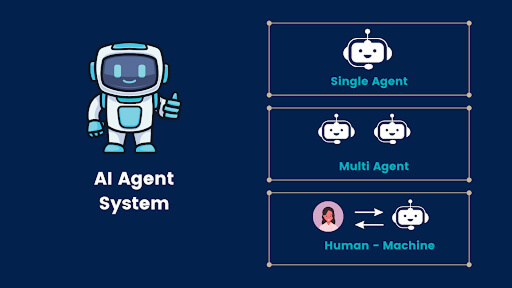
Multi-agent AI is a system comprising multiple intelligent agents that interact to solve problems or achieve goals. Each agent works independently but can collaborate with others. These agents might be bots, language models like ChatGPT, or even physical robots.
Instead of having one large AI model do everything, each agent is responsible for a specific task. Together, they function like a team in a multi-agent system in AI.
Real-World Analogy
Think of a restaurant. You’ve got a chef, a waiter, a dishwasher, and a manager. Each plays a different role, but they all work together to serve customers. Multi-agent AI works the same way. Every agent does its part, and the whole system runs more smoothly.
Core Concepts
Autonomy
Each agent can operate independently. It makes decisions, takes action, and doesn’t require micromanagement.
Communication
Agents exchange information through APIs, messages, or shared memory. This helps them coordinate tasks.
Coordination
They split responsibilities, avoid conflicts, and align their goals. Think of it like dividing up a group project.
Specialization
Not every agent does everything. Some handle specific tasks, like data scraping or user interaction.
How It Works
Agents can be rule-based or powered by large language models (LLMs). They follow instructions, reason with context, and adapt as things change.
Let’s say you want to automate onboarding:
- One agent reads and extracts information from forms.
- Another verifies documents.
- A third updates your CRM.
- A monitoring agent flags anything unusual.
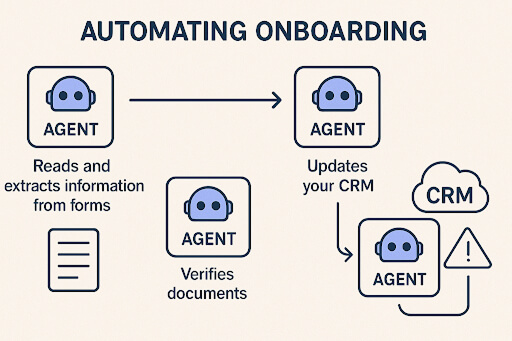
All of this occurs with minimal human intervention. The agents coordinate in real-time. This is the essence of multi-agent AI systems.
This isn’t theoretical; it’s happening right now in 2025.
Why Multi-Agent AI Matters in 2025
Growing Complexity
Businesses run on hundreds of processes. One AI agent can’t handle everything anymore.
Faster Outcomes
By splitting up tasks, agents can complete work more efficiently. You get results faster.
More Reliable Systems
If one agent breaks, others take over. This builds resilience into your workflow.
Easier Updates
Swap out one agent without disrupting the rest of your system.
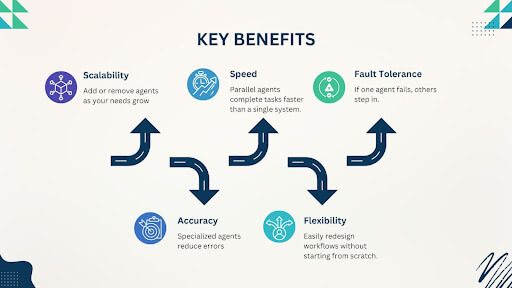
Key Benefits
- Scalability – Add or remove agents as your needs grow.
- Speed – Parallel agents complete tasks faster than a single system.
- Accuracy – Specialized agents reduce errors.
- Flexibility – Easily redesign workflows without starting from scratch.
- Fault Tolerance – If one agent fails, others step in.
Where It’s Used
E-commerce
- One bot tracks inventory.
- Another update on prices.
- A customer support agent handles queries.
Together, they create a smoother shopping experience with multi-agent AI systems.
Healthcare
- A diagnostic agent reads symptoms.
- Another book appointment.
- A monitoring bot alerts doctors to emergencies.
Multi-agent AI systems can reduce delays and improve care.
Banking and Finance
- KYC agents verify customer identity.
- Risk analysis bots evaluate loan applications.
- Fraud detection agents monitor transactions.
Banks save time and reduce fraud using multi-ai agent systems.
Manufacturing
- Robots build parts.
- Quality agents check the output.
- Maintenance bots schedule fixes before breakdowns.
This coordination cuts downtime and improves quality through emergent behaviors in multi-agent systems.
Tools and Frameworks to Try
Here are some multi-agent tools making waves in 2025:
- Autogen by Microsoft – Build teams of LLM-powered agents.
- LangGraph – Design workflows visually with graph-based agents.
- CrewAI – Set up AI agent teams for tasks like research and writing.
- ChatDev – Simulates a virtual software team.
- AgentVerse – Experiment and deploy agents in simulated environments.
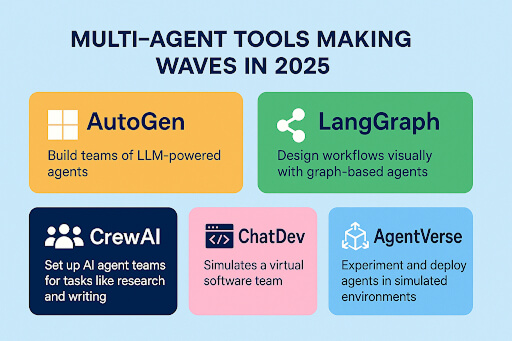
These platforms help you move from idea to deployment faster and support the design of multi-agent AI systems.
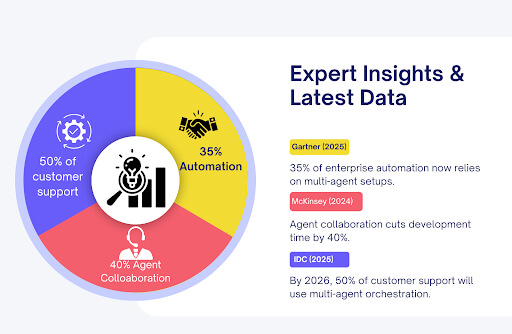
Expert Insights & Latest Data
“The future of AI isn’t solo agents doing tasks. It’s systems of agents collaborating on goals.” Andrew Ng, AI Researcher (2024)
- 35% of enterprise automation now relies on multi-agent setups.
- Agent collaboration cuts development time by 40%.
- By 2026, 50% of customer support will use multi-agent orchestration.
Challenges to Keep in Mind
- Security – Each agent needs limited access to prevent misuse. Multi-agent security technology is becoming increasingly critical.
- Cost – LLM-based agents aren’t cheap to run.
- Debugging – Tracking errors across multiple agents is harder.
- Trust – You need rules and oversight to prevent agents from acting unpredictably.
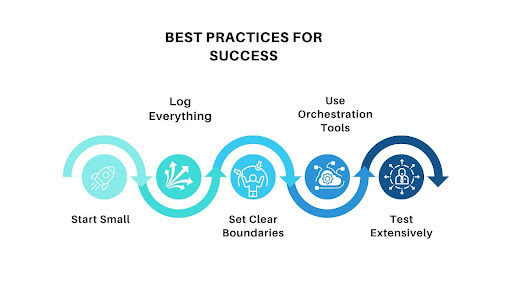
Best Practices for Success
- Start Small – Build a basic system using just 2–3 agents to handle a simple task. Focus on understanding coordination, roles, and outcomes.
- Log Everything – Capture detailed logs of agent actions, decisions, and communication. This helps diagnose errors, measure performance, and ensure accountability.
- Set Clear Boundaries – Use role definitions, access control, and APIs to isolate agent capabilities. This ensures agents stay within their scope and prevents unintended actions.
- Use Orchestration Tools – Tools like LangGraph and CrewAI simplify coordination by offering visual workflows, agent-to-agent communication paths, and debugging features.
- Test Extensively – Simulate edge cases, unexpected inputs, and agent failure scenarios. Testing in a controlled environment prevents issues once the system is live.
Future of Multi-Agent AI
In the next few years, you’ll see agents handling:
- End-to-end customer journeys
- Internal business operations
- Automated research and development
- Personalized experiences in real time
As more businesses adopt this structure, multi-ai agent systems will become integral to your core workflows, rather than just being helpers.
And the best part? You don’t need to know everything about AI to start using it.
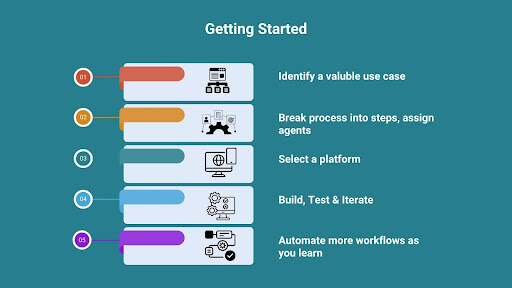
Getting Started
Start with one use case that creates value for your team or business. Define clear goals, then break the process into steps. Assign an agent to each role.
Next, choose a platform like CrewAI or LangGraph that allows you to plug in tools and define each agent’s capabilities easily. Build your setup, test it thoroughly, and iterate based on performance.
You’ll learn fast, and once it clicks, you’ll start spotting more areas to automate or improve with multi-agent AI. Whether it’s internal ops or external workflows, the possibilities multiply quickly once your first multi-ai agent is in place.
Conclusion
Multi-agent AI isn’t just a buzzword; it’s a decisive shift in how intelligent systems operate. From automation to decision-making, multi-agent AI is building resilient, scalable, and highly adaptive solutions across every industry.
Whether you’re exploring multi-agent systems in AI for automation, deploying multi-agent security technology, or just curious about emergent behaviors in multi-agent systems, this is the time to dive in.
Start small. Stay curious. The future is collaborative; it’s already here.
FAQs
1. How is multi-agent AI different from traditional automation?
Traditional automation follows scripts. Multi-agent AI utilizes teams of systems that adapt and coordinate with one another.
2. Do I need to code to use these systems?
Not always. Tools like CrewAI and LangGraph offer visual or low-code interfaces.
3. What kind of projects work best with multi-agent AI?
Projects involving multiple steps, departments, or data sources, such as onboarding, customer support, or analysis.
4. How do I ensure agents don’t make wrong decisions?
Use guardrails, permissions, logs, and human review.
How Can [x]cube LABS Help?
At [x]cube LABS, we craft intelligent AI agents that seamlessly integrate with your systems, enhancing efficiency and innovation:
- Intelligent Virtual Assistants: Deploy AI-driven chatbots and voice assistants for 24/7 personalized customer support, streamlining service and reducing call center volume.
- RPA Agents for Process Automation: Automate repetitive tasks like invoicing and compliance checks, minimizing errors and boosting operational efficiency.
- Predictive Analytics & Decision-Making Agents: Utilize machine learning to forecast demand, optimize inventory, and provide real-time strategic insights.
- Supply Chain & Logistics Multi-Agent Systems: Improve supply chain efficiency through autonomous agents managing inventory and dynamically adapting logistics operations.
- Autonomous Cybersecurity Agents: Enhance security by autonomously detecting anomalies, responding to threats, and enforcing policies in real-time.
- Generative AI & Content Creation Agents: Accelerate content production with AI-generated descriptions, visuals, and code, ensuring brand consistency and scalability.
Integrate our Agentic AI solutions to automate tasks, derive actionable insights, and deliver superior customer experiences effortlessly within your existing workflows.
For more information and to schedule a FREE demo, check out all our ready-to-deploy agents here.