
In 2025, artificial intelligence (AI) will have evolved from a buzzword to a business imperative. Yet, many organizations still struggle to move beyond isolated AI experiments. The key to unlocking AI’s full potential lies in integrating it into core business processes through well-designed Agentic AI workflows. These workflows enable companies to automate complex tasks, enhance decision-making, and drive innovation at scale.
Why Agentic AI Workflows Are the Backbone of Smart Business
Artificial Intelligence is no longer a future concept—it’s a necessity now. From small startups to global enterprises, companies are racing to integrate AI into their operations. But here’s the catch: AI alone isn’t the solution. You need a structure that makes it work.
That’s where Agentic AI workflows come in.
An AI workflow is the bridge between intelligent models and real-world results. It’s how businesses turn raw data and algorithms into consistent, scalable actions. Think of it like a digital assembly line—but instead of making cars, it’s making more intelligent decisions, faster processes, and more personalized customer experiences.
This guide explains Agentic AI workflows, why they matter, how to implement them, and what results you can expect when you get them right.
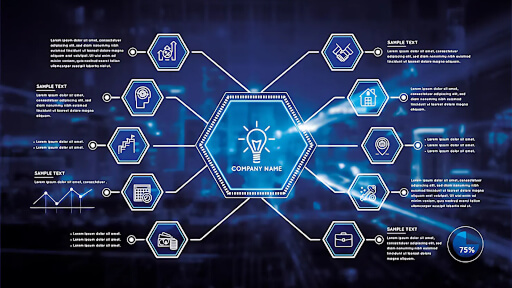
What Are Agentic AI Workflows?
An AI workflow is a structured sequence of tasks that leverages AI technologies to automate and optimize business processes. Unlike traditional workflows, which rely heavily on manual input and predefined rules, Agentic AI workflows incorporate machine learning, natural language processing, and other AI capabilities to adapt and improve over time.
Key Components of Agentic AI Workflows:
- Data Collection and Preprocessing: Gathering and cleaning data to ensure quality inputs for AI models.
- Model Training and Deployment: Developing AI models to learn from data and deploy them into production environments.
- Integration with Business Systems: Connecting AI models with existing enterprise systems for seamless operation.
- Monitoring and Feedback Loops: Continuously tracking performance and feeding results into the system for ongoing improvement.
Benefits of Implementing Agentic AI Workflows
1. Enhanced Efficiency and Productivity
Agentic AI workflows can significantly reduce the time and effort required for routine tasks. According to a report by Master of Code, companies implementing AI workflow automation have seen productivity increases up to 4.8 times and error reductions by 49%.
2. Cost Reduction
Automating processes with AI can lead to substantial cost savings. Deloitte found that organizations using AI in workflow automation expect a 31% decrease in operational expenses.
3. Improved Accuracy and Compliance
AI systems handle repetitive tasks with high accuracy, reducing the likelihood of human error. This is particularly beneficial in industries with strict compliance requirements, such as finance and healthcare.
4. Scalability
Agentic AI workflows can easily scale to handle increasing volumes of work without a proportional increase in resources, enabling businesses to grow more efficiently.
5. Enhanced Decision-Making
Agentic AI workflows provide valuable insights supporting better organizational decision-making by analyzing large datasets and identifying patterns.

Real-World Examples of Agentic AI Workflows in Action
Agentic AI workflows are already in play across industries:
1. E-commerce
When you browse Amazon and see product recommendations tailored to your behavior, that’s an AI workflow. It pulls your browsing history, combines it with millions of data points, runs it through recommendation models, and delivers suggestions—all in milliseconds.
2. Banking
JP Morgan Chase uses AI to review legal documents and flag risk. Their COIN (Contract Intelligence) program saves over 360,000 hours of manual work each year. This is possible because of a tightly integrated AI workflow that scans, interprets, and routes insights to compliance teams.
3. Healthcare
Hospitals use Agentic AI workflows to automate triage systems, predict patient readmissions, and flag anomalies in medical imaging. For example, AI-driven diagnostic tools can detect diseases like diabetic retinopathy or pneumonia faster than a typical radiologist.
4. Marketing
Agentic AI workflows help marketers personalize campaigns. A workflow might start with a user’s email click, analyze their behavior on a landing page, feed that into a predictive model, and then trigger a customized follow-up sequence via email or SMS.
Steps to Build and Implement Agentic AI Workflows
Getting started with Agentic AI workflows doesn’t mean rebuilding your entire company from scratch. It’s about plugging intelligence into the systems you already have. Here’s how.
Step 1: Identify High-Impact Use Cases
Start with problems that matter. Look for repetitive tasks that are time-consuming, expensive, or error-prone—examples: customer onboarding, churn prediction, or content moderation.
Step 2: Get Your Data in Shape
AI is only as good as the data it trains on. Clean, accurate, and relevant data is essential. Set up data pipelines that pull from CRMs, databases, websites, IoT sensors—whatever fuels your business.
Step 3: Choose the Right AI Tools
There’s no shortage of platforms—from AWS SageMaker to Google Vertex AI, DataRobot, and open-source tools like TensorFlow or Hugging Face. Choose based on your internal skills, scalability needs, and what you want to build.
Step 4: Build and Train Models
This step involves data scientists or machine learning engineers who can create models based on your goals. The model might be a recommendation engine, classification model, or chatbot that understands customer sentiment.
Step 5: Integrate with Business Systems
AI doesn’t work in isolation. It must connect with tools like Salesforce, HubSpot, SAP, or Zendesk. This is where APIs, cloud platforms, and middleware come in.
Step 6: Monitor, Optimize, Repeat
Once your AI workflow is live, don’t stop. Monitor its performance, get feedback, and retrain your models. The best AI systems keep improving—just like your business should.

Common Challenges and How to Overcome Them
Agentic AI workflows are powerful, but they’re not magic. You’ll need to tackle some real-world issues:
• Talent Shortage
There’s a global shortage of AI engineers and data scientists. Consider investing in training, upskilling current teams, or partnering with AI solution providers.
• Data Privacy and Compliance
If you’re working with personal data, ensure your Agentic AI workflows comply with regulations like GDPR or HIPAA. Implement strong governance and auditability features.
• Integration Headaches
Many organizations have legacy systems that don’t work well with AI tools, which can slow implementation. Use modern APIs and consider phased integration.
• Resistance to Change
Agentic AI workflows can feel threatening to employees. Lead with transparency and show how AI will support, not replace, their roles.
The Future of Agentic AI Workflows
As AI becomes more autonomous, we’re entering the era of agentic workflows, where intelligent agents not only complete tasks but also decide what needs to be done and how to do it. These agents coordinate across tools, monitor goals, and adjust strategies dynamically.
Gartner predicts that 50% of enterprises will have deployed Agentic AI workflows that autonomously execute tasks across multiple business functions by 2027. Smart organizations are laying the groundwork now.

Conclusion
Agentic AI workflows aren’t just a tool—they’re a strategy. They represent a shift from reactive operations to proactive intelligence. Whether you’re looking to boost efficiency, scale smarter, or innovate faster, well-designed Agentic AI workflows can get you there.
But it’s not just about adopting AI. It’s about using it with purpose and starting small, learning fast, and scaling what works.
If you’re not thinking about AI Agentic workflows today, your competitors already are.
FAQ’s
1. What is an AI workflow?
An AI workflow is a step-by-step process that uses artificial intelligence to automate tasks, analyze data, and improve decision-making across business operations.
2. What are the key benefits of AI workflows?
AI workflows boost efficiency, reduce costs, enhance accuracy, and enable smarter, faster decisions by automating repetitive tasks and providing real-time insights.
3. How do you implement an AI workflow?
Start by identifying repetitive, high-impact tasks. Prepare clean data, choose suitable AI tools, build and train models, integrate with existing systems, and continuously monitor and refine.
4. Are AI workflows suitable for small businesses?
Yes. With the rise of accessible AI tools and cloud platforms, even small businesses can implement AI workflows to streamline operations and improve customer experience.
How Can [x]cube LABS Help?
At [x]cube LABS, we craft intelligent AI agents that seamlessly integrate with your systems, enhancing efficiency and innovation:
- Intelligent Virtual Assistants: Deploy AI-driven chatbots and voice assistants for 24/7 personalized customer support, streamlining service and reducing call center volume.
- RPA Agents for Process Automation: Automate repetitive tasks like invoicing and compliance checks, minimizing errors and boosting operational efficiency.
- Predictive Analytics & Decision-Making Agents: Utilize machine learning to forecast demand, optimize inventory, and provide real-time strategic insights.
- Supply Chain & Logistics Multi-Agent Systems: These systems improve supply chain efficiency by using autonomous agents to manage inventory and dynamically adapt logistics operations.
- Autonomous Cybersecurity Agents: Enhance security by autonomously detecting anomalies, responding to threats, and enforcing policies in real-time.
- Generative AI & Content Creation Agents: Accelerate content production with AI-generated descriptions, visuals, and code, ensuring brand consistency and scalability.
Integrate our Agentic AI solutions to automate tasks, derive actionable insights, and deliver superior customer experiences effortlessly within your existing workflows.
For more information and to schedule a FREE demo, check out all our ready-to-deploy agents here.